
Reverse Mortgage Myths, Answered Honestly
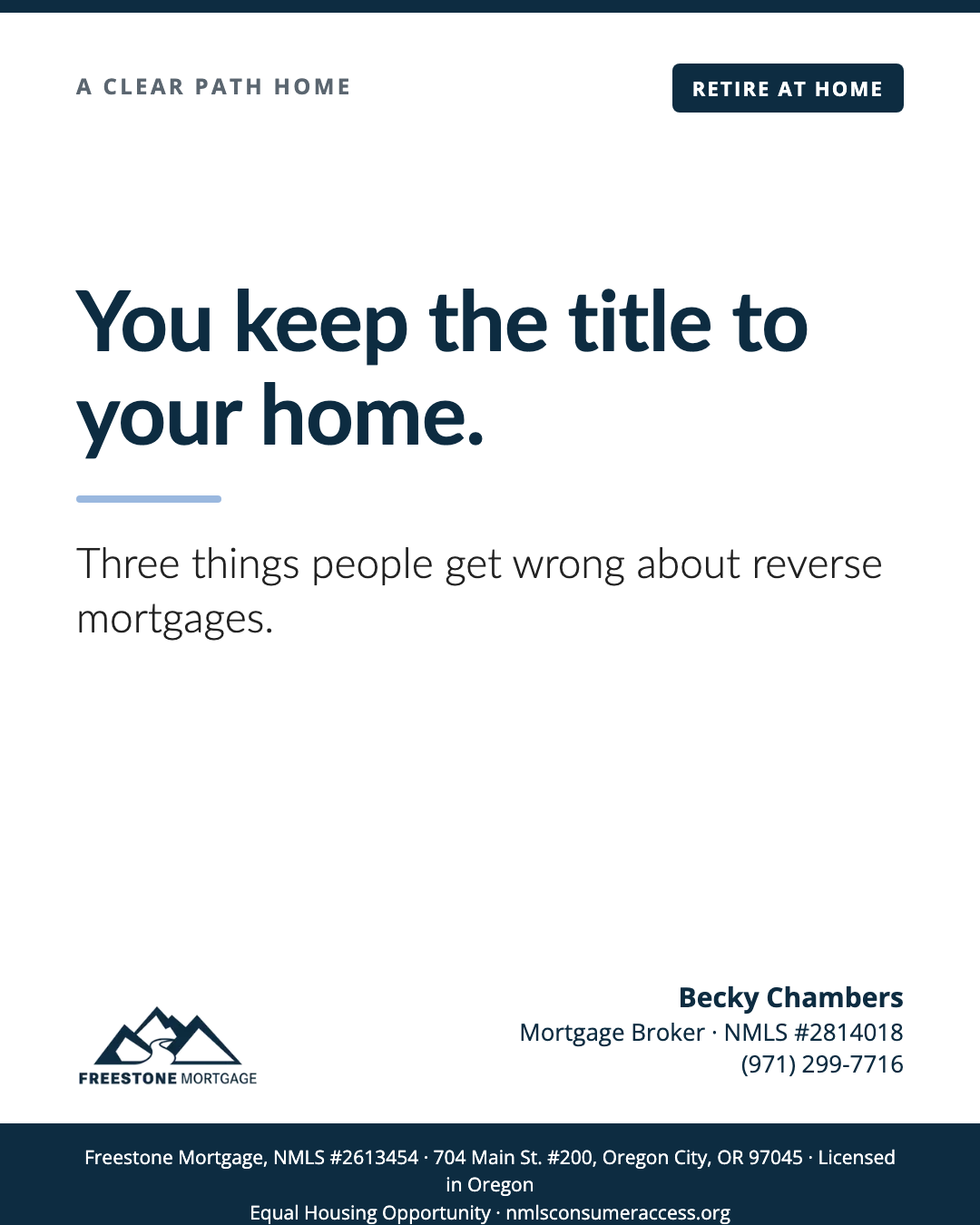
I hear the same worries about reverse mortgages every week. Some of them were true thirty years ago. Some were never true. All of them keep people from asking the one question that matters, which is whether the loan fits their situation.
So here is the honest version of each one, from a mortgage broker in Oregon City who would rather you had the facts than the fear.
Myth one: the bank takes your house
You keep title to your home. The lender has a lien, the same as with any mortgage. The loan comes due when you sell, move out permanently, or pass away, or if you stop meeting the loan terms. Those terms are paying your property taxes and homeowners insurance, maintaining the home, and living there as your primary residence.
Keep those and the house is yours for as long as you want it.
Myth two: your kids inherit the debt
Reverse mortgages are non-recourse. If the home sells for less than the loan balance, nobody owes the difference. Not you, not your estate, not your children.
If your heirs want to keep the home, they can pay off the balance, usually by refinancing or with other funds. If they would rather sell, they sell, pay the loan, and keep whatever equity is left. They get a reasonable window to decide.
Myth three: it is only for people who are broke
This one costs people the most. Financial planners use reverse mortgage lines of credit as a planning tool for clients who have plenty of assets. The unused portion of the line grows over time. In a down market the client draws from the line instead of selling investments at a loss.
It is a tool for protecting a retirement plan, not a sign that one has failed.
Myth four: you have to be 62
The FHA-insured HECM starts at 62. Some proprietary programs start at 55, depending on your state and your home. If you are in that window and carrying a mortgage payment, it is worth a conversation to see which doors are open.
Myth five: you cannot buy a home with one
There is a purchase version of the reverse mortgage. You bring a larger down payment, often from the sale of your current home, and the reverse mortgage covers the rest. No monthly principal and interest payment on the new place. It is how a lot of my clients move to a single level home or closer to the grandkids without draining savings.
Myth six: the money is taxable income
Reverse mortgage proceeds are loan proceeds, not income. That generally matters for income tax and for some benefits. I always say bring this one to your CPA, because your situation is yours.
Myth seven: you cannot change your mind
Every HECM borrower meets with an independent HUD-approved counselor before applying. The counselor does not work for me or for any lender. After you sign at closing there is a three business day window where you can cancel. I think both of those protections are good, and I tell every client about them.
The one thing that is not a myth
You still pay property taxes, homeowners insurance, HOA dues if you have them, and the cost of keeping the home up. You must live there as your primary residence. Miss those and the loan can come due. This is the honest list, and it fits on a sticky note.
Bring your questions
I serve Oregon City, Clackamas County, Multnomah County, Washington County and the rest of Oregon. Adult children are welcome on every call. So are planners and CPAs. Everyone hears the same answers at the same time.
If you have a worry that is not on this list, message me and I will answer it straight.
Becky Chambers, Mortgage Broker, NMLS #2814018. Freestone Mortgage, NMLS #2613454. Licensed in Oregon. Equal Housing Opportunity. This material is not from HUD or FHA and was not approved by HUD or any government agency. For informational purposes only. This is not a commitment to lend.